Brand and Website Design for Queer History Boston, LGBTQ+ Community Archives

Queer History Boston
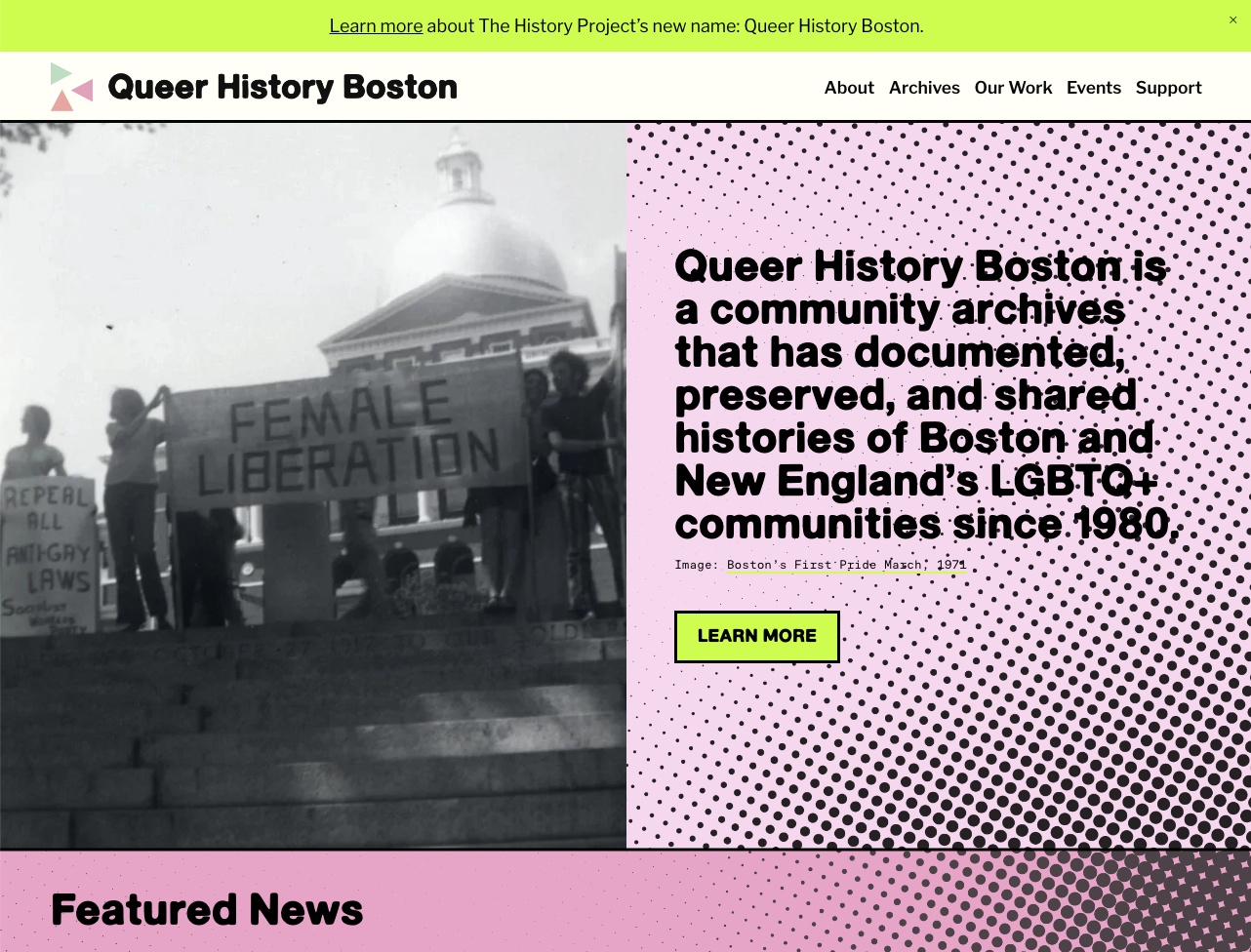
Brand identity and website for a LGBTQ+ community archive.

Queer History Boston (formerly The History Project) is one of the nation’s longest-running LGBTQ+ community archives. Founded in 1980, the organization documents, preserves, and shares the stories of queer and trans life in Boston and New England. The rebrand marks a public shift toward visibility and accessibility, introducing a name and visual system that reflect the energy, history, and community at the heart of its work.

  • Role

    Brand and Web Designer
  • Studio

    Joelle Riffle
  • Collaborators

  • Deliverables

    Brand identity, logo system, website design, and digital templates
  • Client

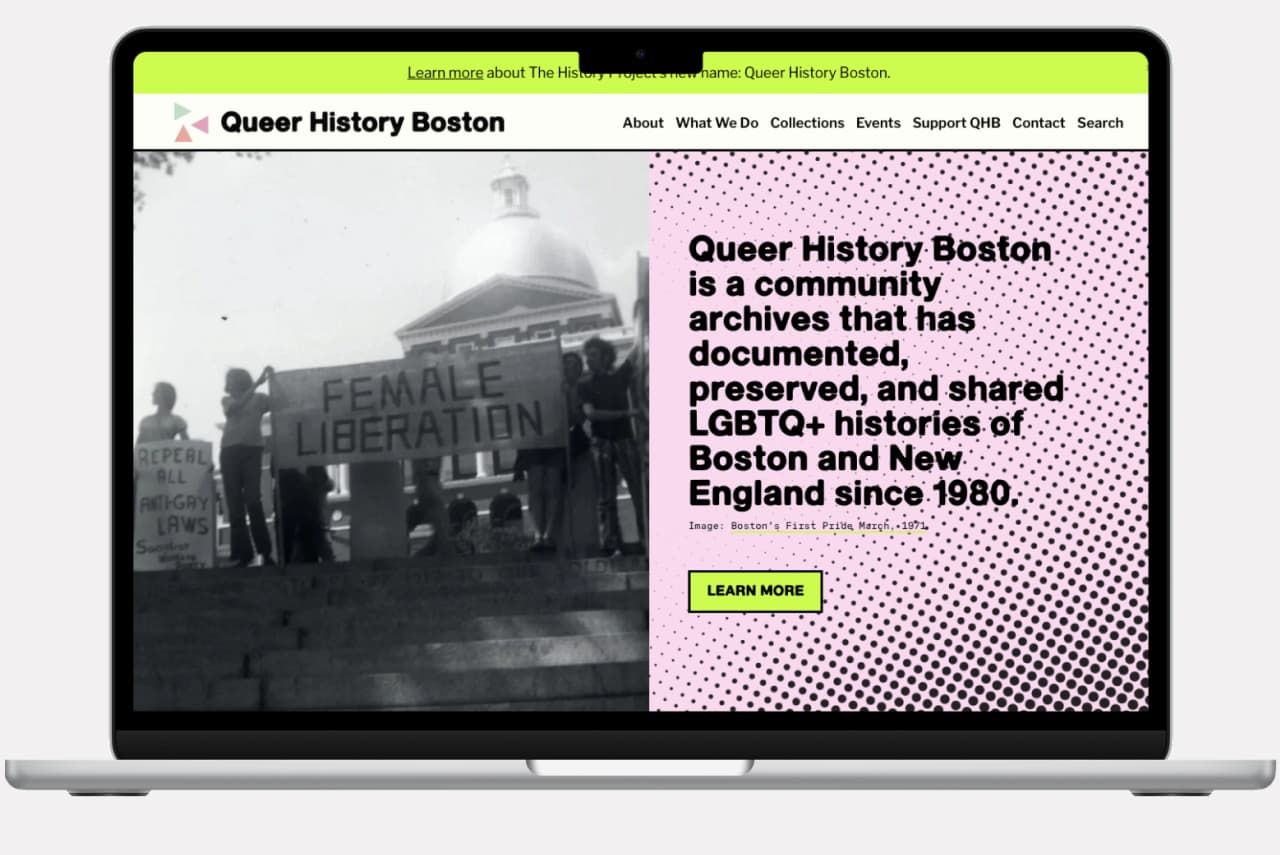
    Queer History Boston is a community archives that has documented, preserved, and shared LGBTQ+ histories of Boston and New England since 1980.
Digital Archive

A responsive and useful website that points users to the many programs, resources, and events QHB offers, in addition to digital and in-person access to the archives.

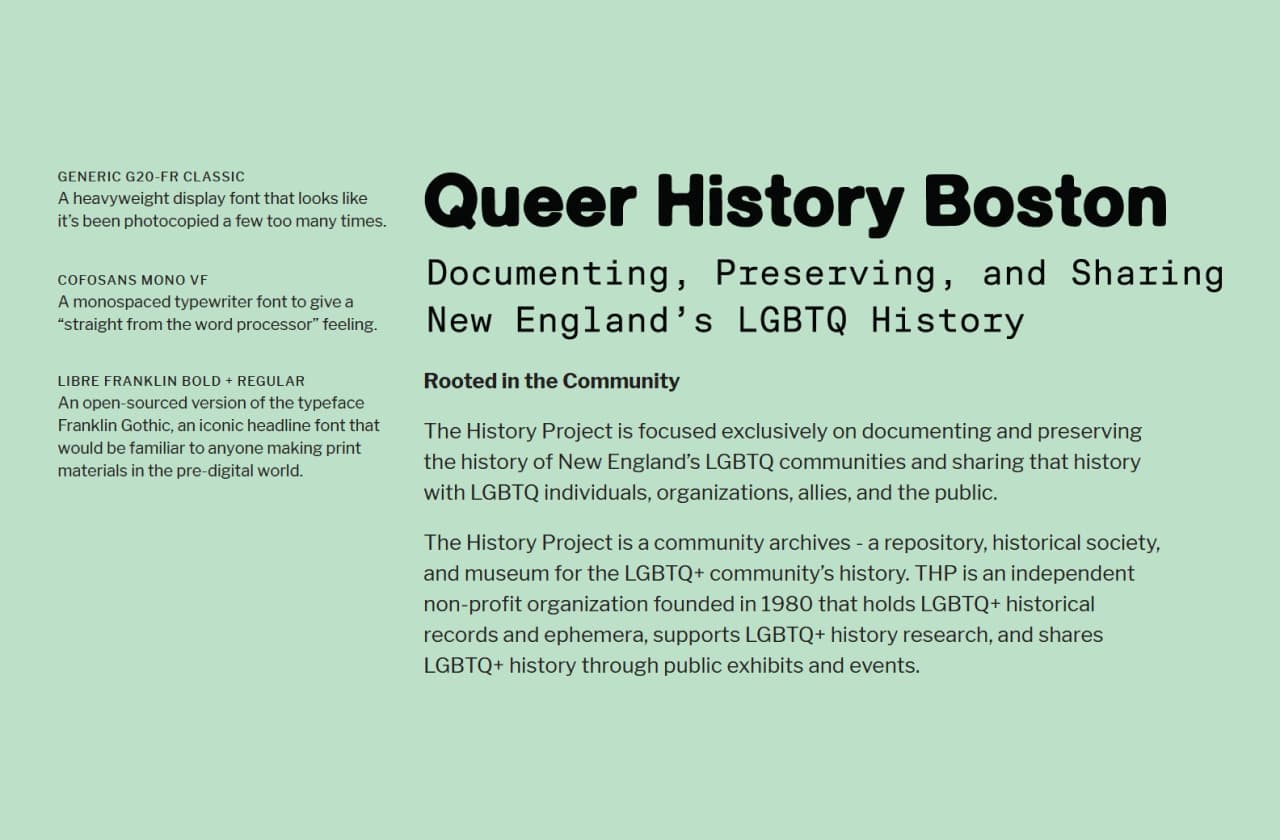
Typefaces Generic, CoFo Sans Mono, and Libre Franklin echo the feel of early word processors and photocopiers while staying easy to read across screens. The result is a visual system that’s flexible, familiar, and easy for the QHB team to use across digital and print materials.

Print and digital templates use a simple grid structure and high-contrast typography to keep the focus on archival materials. Halftone patterns and outlined sections reference analog printing while maintaining a clean, accessible container for event posters and more.

Coming Out

For more than 40 years, The History Project preserved Boston’s LGBTQ+ history under a name chosen when “gay” could not appear in a nonprofit title. In 2025, they needed a new identity that reflects their mission and makes the work easier to find and understand.

The logo is built from three triangles that point backward, forward, and upward representing the past, future, and presence of queer community. The pastel color palete comes from the colors of copy paper used to make community flyers and zines.

Joelle Riffle